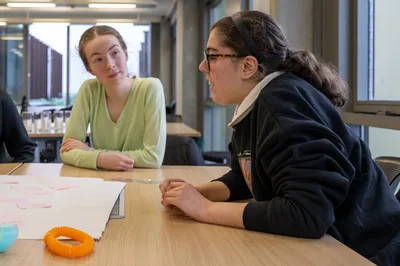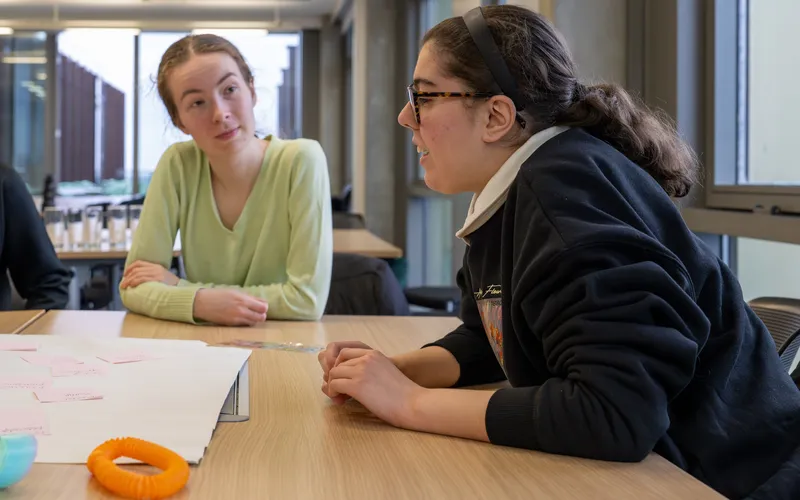
Warda arrived at the Community Wealth Fund Youth Panel as someone who found social situations difficult and often preferred to stay quiet in unfamiliar spaces. She was starting university, navigating a recent autism diagnosis, and stepping into a room full of strangers. It felt daunting at first. Over time, that changed. Within months she was helping co-design an investment strategy, interrogating business proposals, questioning financial information alongside the investment team and deciding where the investment went.
"This is just so huge. It makes it difficult to sum up."
One of the things Warda valued most about the panel was the way it encouraged young people to speak honestly and openly, even when they held different opinions from others in the room.
"I think the main thing is just letting people understand that their opinions and their voice matter," she said.
The panel created a culture where different ways of thinking were accepted. For someone recently diagnosed with autism, that mattered deeply to her. Being part of a group that genuinely embraced different perspectives helped her reflect on what made her feel comfortable in group settings and what kinds of spaces allow people to contribute in their own way.
"You shouldn't be afraid to voice your opinion, even if you don't necessarily agree with anyone else."
Over time, this helped Warda trust that her thoughts had a genuine place in the room. It also helped her see both herself and others differently.
"It made me realise that everyone's thinking is different. The way we view the world is different compared to everyone else."
That curiosity extended to other parts of her life. She described wanting to hear more from other autistic young people and adults, particularly about their experiences of work, relationships and everyday life.
"I want to see what it's like for them," she said.
Those conversations reinforced for her how much representation and understanding matter, especially for young people still figuring out where they fit.
The programme also helped her recognise the range of skills and experiences she had developed, even when it was hard to articulate them. The confidence she built carried well beyond the sessions themselves, into university life and new social situations.
"I don't think I'd have the confidence I have today."
Before joining the panel, Warda had originally considered an apprenticeship. Without the experience, she reflected, her year would have looked very different. The programme shifted how she saw herself and her right to take up space in conversations and in decision-making.
Warda described the Youth Panel as a place where she felt listened to, respected and able to grow at her own pace. Reflecting on the journey overall, she put it simply:
"I felt that no matter what, my voice was heard."